Decide whether the VD500 fits the immediate diagnostic job

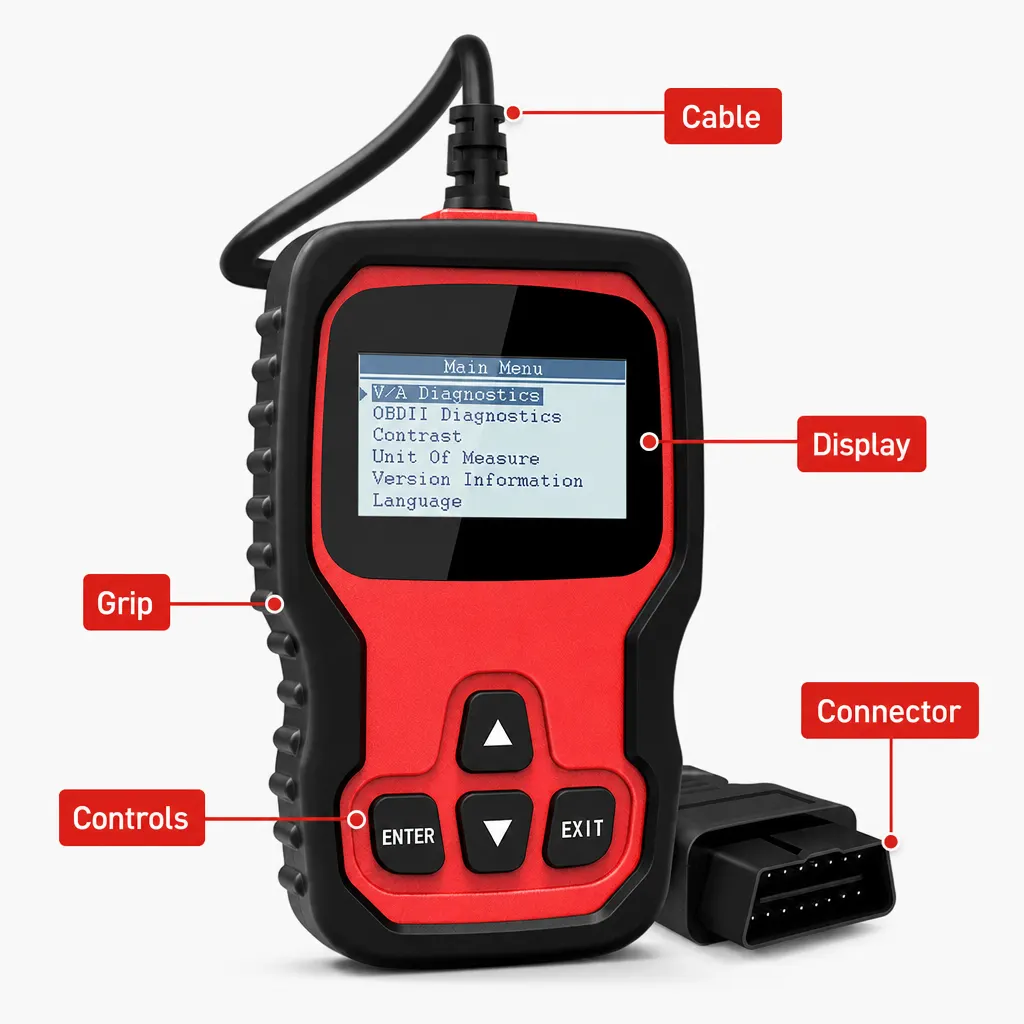
VD500 Vehicle Diagnostic Scanner controls and screen

If you are searching for a vd500 scanner uk, treat the VD500 as a possible first step rather than proof that a vehicle fault can be diagnosed completely. The documented product information identifies it as a vehicle diagnostic scanner, lists 12 V operating voltage and gives a working-temperature range of -20 to 40 °C. It does not state the exact vehicle makes, model years, control units, diagnostic functions, connection method, display language or supplied accessories. Before buying, match those missing details against your car and the fault you need to investigate.

That approach is useful at a home parking space, an independent garage or a used-car viewing because it prevents a common mistake: buying a scanner based on its name alone. Write down the vehicle make, model, year, engine and the dashboard message or symptom. Then ask whether the seller's instructions explicitly confirm compatibility and the system you need to check. If those answers are not available, the sensible decision may be to request clarification first, not to assume that a listed vehicle scanner will communicate with every part of a VAG vehicle.

Set the scanner against a UK driveway or workshop situation

The person most likely to consider this tool is a Volkswagen, Audi, SEAT or Skoda owner who wants more information before paying for a garage inspection. That is a reasonable job for an initial check, particularly when a warning light is intermittent or a used car is being assessed. However, the frozen product record does not document VAG compatibility, supported protocols or coverage of engine, airbag, ABS, transmission or body systems. Those are not minor details: they determine whether the scanner can answer the question you actually have.

The setting also affects how useful the purchase will be. At a packing-bench-style inspection of a car, you may have only a short time to check a vehicle and record its condition. At home, you may have more time to read instructions and compare the result with the symptom. In either case, do not confuse the presence of a diagnostic socket with confirmed communication. The product facts identify the instrument and its 12 V operating requirement, but they do not say what equipment is needed to connect it or whether a phone, laptop, subscription or separate adapter is required.

Check the documented facts before relying on the VD500

The reliable facts are deliberately narrow. The product is identified as a VD500 Vehicle Diagnostic Scanner, and the listed configuration specifies 12 V operating voltage and a -20 to 40 °C working-temperature range. These details can help you judge the basic environment: the scanner is listed for a 12 V vehicle electrical system, and the stated operating range covers conditions from a hard UK winter frost to a warm workshop. They do not establish what the scanner displays, which codes it reads, or whether it can erase codes.

Use the gaps as questions rather than filling them with assumptions. Look for written confirmation of exact make, model, year and engine compatibility; supported diagnostic systems; the connection procedure; power requirements in practice; included leads or adapters; and the meaning of any result. Also check whether instructions explain how to save or record information without clearing it. The public record supplies no dimensions, screen details, kit contents, setup steps or task-fit claims, so a careful buyer should not infer portability, ease of use or advanced functions from the product title.

Use this VD500 pre-purchase checklist at the car

Start with the vehicle check. Record the registration separately from the make, model, year and engine, because a broad make-level match is not the same as confirmation for your exact car. Next, describe the job in plain terms: warning light, intermittent symptom, used-car inspection or another concern. Ask the seller to identify which diagnostic system the VD500 covers for that vehicle and whether the listed configuration is the one supplied. If the answer only repeats that it is a vehicle scanner, the central compatibility question remains open.

Then check the working conditions and setup. Confirm that the vehicle uses the listed 12 V operating voltage, and keep the stated -20 to 40 °C range in mind when planning an outdoor check. Confirm the physical connection, power source, required equipment, included contents and instructions before purchase; none of those details is documented in the supplied record. Finally, decide what you will do with a result: record it for a garage, investigate further or stop using the vehicle. This sequence keeps a code-reading purchase from becoming an unsupported repair decision.

Recognise the mismatch between a scanner and a diagnosis

A vehicle diagnostic scanner should not be treated as a complete diagnosis simply because it produces a code or message. The supplied facts do not even confirm which codes or systems the VD500 can access, so it would be especially risky to promise that it will identify the failed component on a VW, Audi, SEAT or Skoda. Even where a scanner reports stored information, the result would need to be considered alongside the vehicle's symptoms and other checks. A code can guide the next question; it should not automatically justify buying a replacement sensor or another part.

There are also situations where this product should not be your only response. If the car has a serious warning, unsafe handling, loss of braking, smoke, overheating or another urgent symptom, arrange appropriate professional help rather than relying on an unconfirmed scanner capability. Do not clear stored information merely to make a dashboard light disappear, and do not change settings when you do not understand their effect. The product record provides no safety procedure or repair guidance, so the responsible limit is to use it, if suitable, as an information-gathering step.

Compare the VD500 with the question you need answered

For a warning-light check, the key question is whether the scanner supports the exact vehicle and the system associated with that warning. For a used-car inspection, ask whether the tool can perform the checks you need within the time available and whether it requires additional equipment. For an intermittent fault at home, find out whether results can be recorded and whether the instructions explain what displayed information means. The current record confirms none of these functions, so the comparison should focus on documented scope rather than the attractive but vague phrase “vehicle diagnostic scanner”.

A useful comparison has four columns in your notes: vehicle match, diagnostic scope, setup and result handling. Under vehicle match, enter make, model, year and engine. Under diagnostic scope, record the named systems and functions confirmed in writing. Under setup, note the connection method, power requirement and supplied contents. Under result handling, note whether the instructions explain codes, saving information and limits. The VD500 currently gives you the 12 V figure and working-temperature range, but the other entries need confirmation before you can make a confident choice.

Prepare the right questions before contacting the seller

A short, specific message will usually produce a more useful answer than asking whether the scanner “works with VAG”. Give the exact make, model, year and engine, then describe the warning light or inspection task. Ask which systems the listed VD500 configuration supports on that vehicle, how it connects, what is included and whether any app, laptop, subscription or separate adapter is required. Ask, too, whether the instructions explain how to read and record information without clearing it. These questions directly address the uncertainties in the public product record.

Keep the answer with your vehicle notes, especially if you are viewing a used car. If the seller confirms only general compatibility but does not name the system or function, treat that as incomplete evidence. If the scanner is intended for a workshop, also check that the planned storage and operating environment stays within the documented -20 to 40 °C range. The listed 12 V operating voltage is a useful fact, but it is not a substitute for confirmation that the scanner communicates with your exact vehicle.

Take a grounded next step with the VD500 Scanner UK

The practical next step is to pause before purchase and verify the missing fit details. Start with your vehicle information, write down the job you want the scanner to perform, and request written confirmation of compatibility, supported systems, setup and contents. If those points are confirmed, the VD500's documented 12 V operating requirement and -20 to 40 °C working range give you a small amount of useful context for planning where to use it. If they are not confirmed, choose a tool with clearer vehicle and function information or ask a garage what diagnostic access is needed.

That decision protects you from both sides of the problem. You may avoid paying for a tool that cannot communicate with your car, and you avoid treating an eventual code as permission to replace a part without further checks. For a UK owner facing a warning light or used-car inspection, the best result is not simply owning a scanner; it is knowing what question the scanner can answer, what it cannot answer and what you will do next. The VD500 may fit that first step, but the documented facts must be matched to your vehicle before you rely on it.